
Video Wall Installation for Lobbies, Command Centers and Venues
A video wall is more than a large display. It is a system: panels or cabinets, a mounting structure, signal processing, control, content playback, and the power and cooling that keep the picture consistent all day. Innoface Systems designs, installs, programs, and supports commercial video wall installation for organizations that need that system to work the first time and remain serviceable afterward.
We plan walls for lobbies, operations centers, conference rooms, houses of worship, auditoriums, and government facilities. Work is delivered from our offices in Washington, DC; Annapolis, Maryland; Atlanta, Georgia; Houston, Texas; and Tampa, Florida, so survey, installation, and follow-up support are handled by a local team.

What a Video Wall Installation Includes
A complete installation typically covers the display itself — direct-view LED cabinets or narrow-bezel LCD panels — sized for the room and the viewing distance; a mounting method the building can support; power, cabling, and processing; control and source switching; content playback or a connection to your signage platform; and color alignment, testing, and training.
If the same space also needs conferencing, audio, or signage elsewhere in the building, we design the wall as part of that system rather than as a standalone screen.
LED vs. LCD Video Walls
Choosing the right canvas should follow the room rather than a catalog page.
Direct-view LED is built from cabinets that generate their own light. The image can be built to a custom width and height, and there is no bezel grid between cabinets when the wall is aligned correctly. LED is often the better fit when you want a single seamless picture, high brightness in a sunlit lobby, or a canvas larger than a practical LCD array. Pixel pitch — the spacing between LEDs — is selected for how close people will stand. A reception desk a few feet from the wall needs a finer pitch than a wall viewed across a sanctuary or operations floor.
LCD video walls use commercial panels, usually with very narrow bezels, tiled in a grid such as 2×2 or 3×3. They are a strong option when you need a sharp image at a defined size, several sources in a preset layout, or a conference or operations array at a defined scale. If a completely seamless image is the goal, LED is usually the better conversation.
We also compare both options against a single large display or projection when that is the more honest answer for the room. Viewing distance, ambient light, runtime, service access, structure, and content are settled in the site survey.
We specify equipment from leading LED and LCD manufacturers and match it to the signal, processing, and control gear the room requires.
Where Organizations Use Video Walls
Lobbies and reception
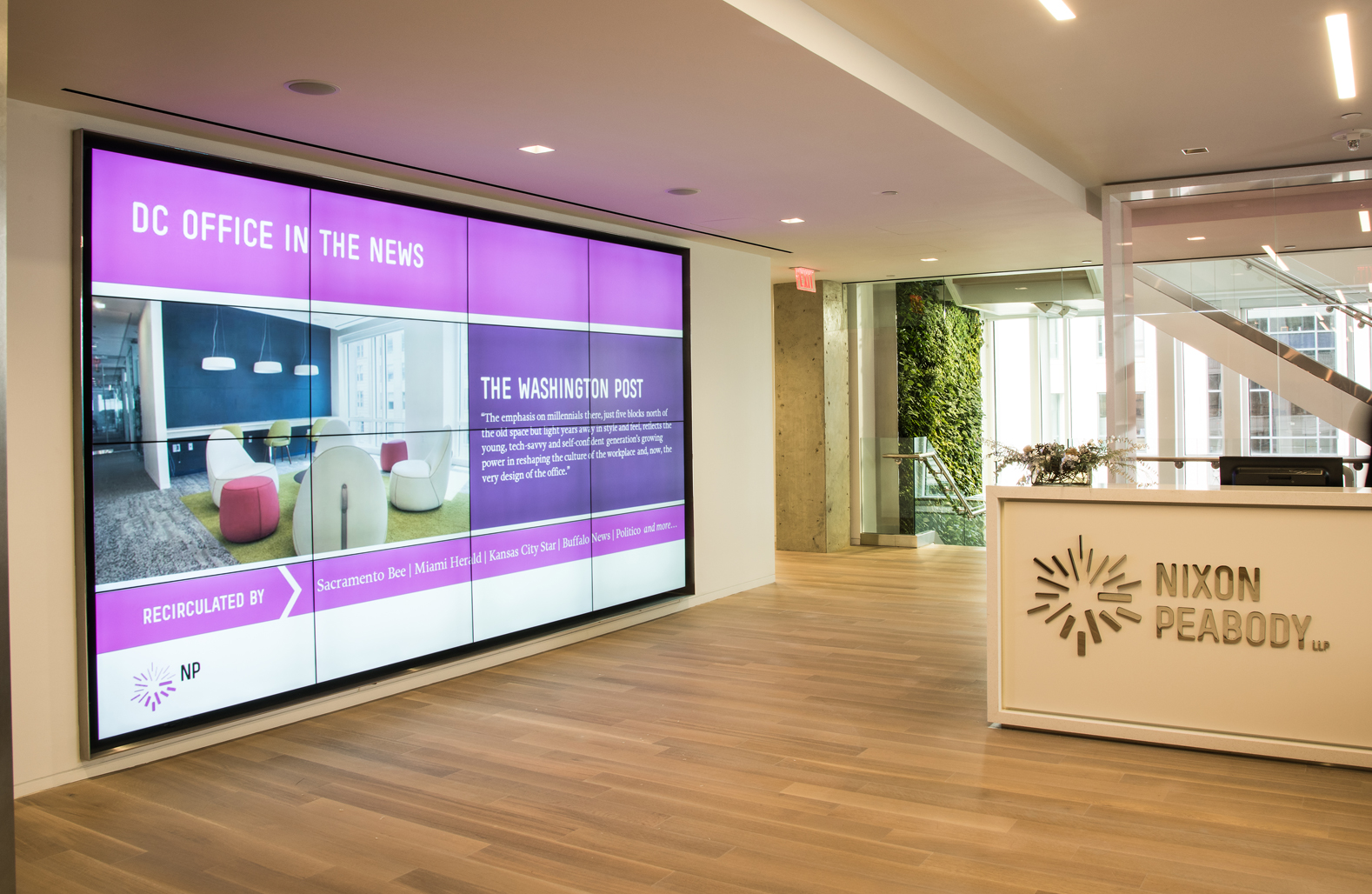
A lobby wall is often the first image a visitor sees. It can carry brand content, wayfinding, event schedules, or a live welcome message, and it has to hold up in mixed lighting — including glass-front entries. Design starts with how close people will stand, how long the wall will run each day, and how your team will update what appears on it.
Control rooms and operations centers
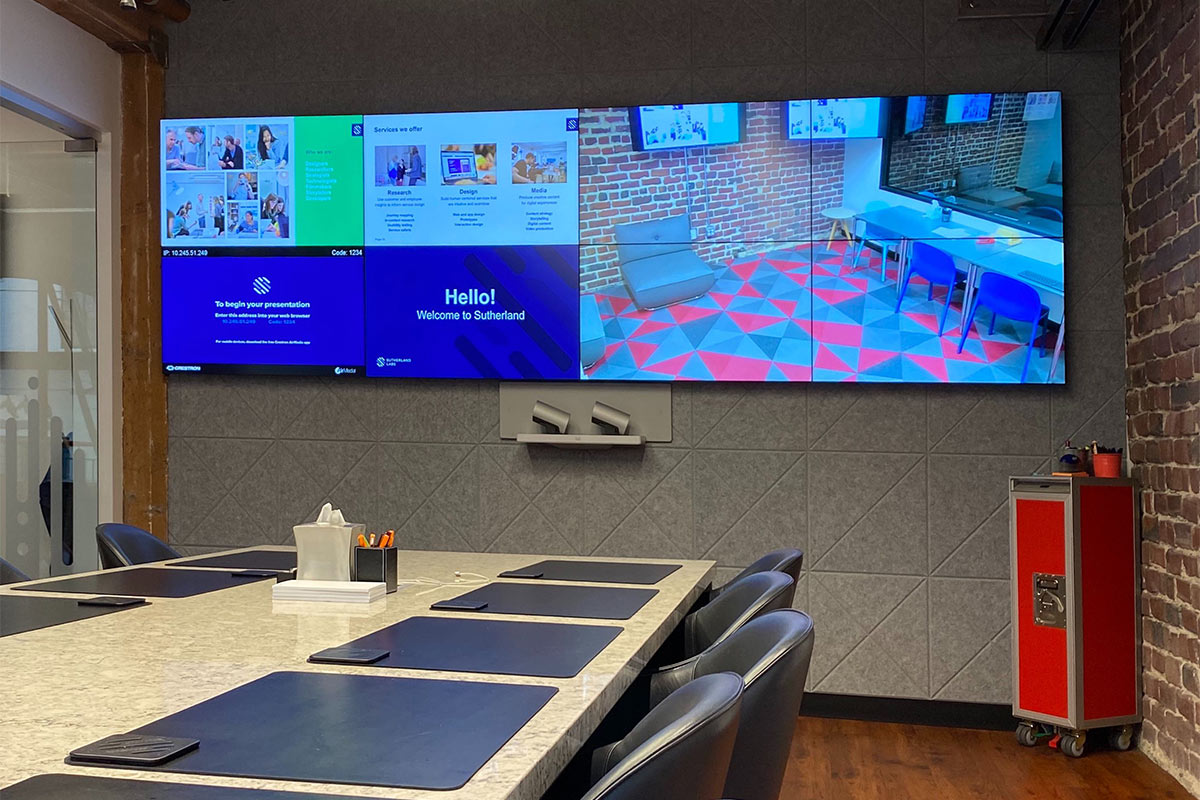
Operations spaces usually need a wall that can show several sources at once and stay up for long shifts. Layouts, processor presets, and operator control matter as much as panel choice. Our packaged NOC option on the AV system packages page includes 2×2 and 4×4 configurations; larger arrays are designed around the room.
Conference rooms and boardrooms
In a meeting room, a video wall may replace a single display when the table is wide, when several sources need to appear together, or when the room also serves as a briefing space. The wall has to work with cameras, microphones, and platforms such as Microsoft Teams or Zoom so a call and a local presentation do not fight each other.
Houses of worship
Sanctuaries and church lobbies use video walls or direct-view LED so the congregation can follow lyrics, scripture, teaching notes, and camera shots from every seat, including balconies. Ambient light, sightlines, and the ability for a small volunteer team to run the system are part of the design, along with house audio and any streaming setup.
Auditoriums and large venues
Auditoriums, training theaters, and similar rooms may call for a video wall, direct-view LED, or large-format projection, depending on throw distance, brightness, and how the stage is used. For auditorium systems in Washington, DC, see our auditorium AV and video wall page. City-specific auditorium pages are linked from each location hub.
Government and public facilities
Briefing rooms, public meeting spaces, and operations centers in government facilities often need a clear, reliable wall and a predictable way to switch sources. Work in these environments also means planning for access rules, after-hours installation windows, and, where it applies, equipment requirements the facility already has in place.

Our Video Wall Installation Process
1. Consultation and site survey. We walk the space, measure viewing distances and ambient light, and review wall construction, power, network paths, and service access. We also talk through how the wall will be used and who will operate it.
2. Design and proposal. You receive a design that specifies technology, size, pixel pitch or panel layout, mounting method, processing, control, and cabling, with a clear scope of work. Structural or electrical coordination is identified before equipment is ordered.
3. Installation. Cabinets or panels are mounted and aligned, cabling is finished and labeled, and processors and control are configured for your sources and layouts.
4. Calibration, training, and handover. We match brightness and color across the wall, test every source, and train your staff. You leave with a documented system and a clear path for support.
Straightforward lobby installations are often completed within a few business days on site once equipment is on hand and the structure is ready. Larger walls take longer.
Why Work With Innoface Systems
Innoface is a full-service commercial AV integrator, not a display-only installer. The same team that designs the wall can tie it into room control, conferencing, audio, and digital signage, then train your staff and support the system after handover. You work with a local office in one of our five markets. We start with how the room is used, then select equipment that can be serviced and supported — including, when it still performs, equipment you already own.
Video Wall Installation in Our Five Office Cities
Use the links below for local context. Each location page will include a unique video-wall section once those drafts are approved.
- Washington, DC — Headquarters at 1250 Connecticut Ave NW, Suite 700, Washington, DC 20036. Call 1-877-721-4040.
- Annapolis and Maryland — 1997 Annapolis Exchange Parkway, Suite 300, Annapolis, MD 21401. Call 1-877-721-4040.
- Atlanta, Georgia — 730 Peachtree St NE, Suite 570, Atlanta, GA 30308. Call 404-343-1757 or 1-877-721-4040.
- Houston, Texas — 5757 Woodway Drive, Suite 300, Houston, TX 77057. Call 1-877-721-4040.
- Tampa, Florida — 100 S Ashley Drive, Tampa, FL 33602. Call 813-200-8854 or 1-877-721-4040.
If your organization has sites in more than one of these cities, we can keep design standards consistent and support each location from the local office.
Video Wall Installation FAQs
What is the difference between an LED video wall and an LCD video wall?
An LED video wall is built from modular cabinets that create a seamless image, which is often preferable for large or brightly lit spaces. An LCD video wall is a grid of narrow-bezel commercial panels, which is often a good fit for meeting rooms and operations areas where a defined array is the right size. We recommend one or the other after a site survey, not before.
How do you choose pixel pitch?
Pixel pitch is chosen for the closest typical viewing distance. The closer people will stand, the finer the pitch needs to be so the image stays sharp. We measure that distance in the room rather than using a one-size recommendation.
How long does a commercial video wall installation take?
On-site installation for a straightforward lobby wall is often measured in a few business days once the equipment has arrived and the structure is ready. Design, procurement, and any building coordination happen before that. Larger walls, outdoor work, or rooms that need new power or structural support take longer; the timeline is set in the proposal.
What happens during a site survey?
We review how the wall will be used, measure viewing distances and light, and check the wall or rigging structure, power, cable routes, cooling, and service access. We also note building constraints such as elevator size, loading hours, and security access so install day is planned against real conditions.
Can a video wall be used for Microsoft Teams or Zoom as well as signage?
Yes. A wall can display signage, presentation sources, and conferencing video, provided the processor, camera placement, and audio are designed for those modes. Many organizations use scheduled signage between meetings and switch to a call or a briefing layout when the room is in use.
Which cities does Innoface install video walls in?
We install from our offices in Washington, DC; Annapolis, Maryland; Atlanta, Georgia; Houston, Texas; and Tampa, Florida, and we serve organizations in those metro areas. If you have more than one site, we can coordinate the work across offices.
How is the wall supported after installation?
After handover we train your staff and remain available for phone support and on-site service from the local office. If something needs adjustment, or if you add sources later, you are calling the same company that installed the wall.
Do we have to replace our existing displays and control system?
Not always. If current displays, processors, or control equipment still meet the need, we can often build around them. The survey is where we decide what can stay and what should be replaced.
Plan Your Video Wall Installation
If you are planning a lobby wall, an operations display, or a large-format canvas for a sanctuary or auditorium, start with a conversation and a site visit. Call Innoface Systems at 1-877-721-4040, or use our contact page to schedule a consultation. Tell us the city, the room, and what you need the wall to do; we will take it from the survey forward.